How to Improve Brand Visibility in AI Search Engines (2026 Guide)
The Search Button Has Changed
The search button doesn’t work the way it used to.
People aren’t hunting for ten blue links anymore. They want one clear answer. Fast.
Today, platforms like Google show AI Overviews at the top of results. ChatGPT gives complete responses in seconds. Perplexity AI summarizes information and cites sources instantly.
This is where AI answers replacing clicks becomes real.
Instead of clicking through five websites, users get the summary right on the screen. That’s called zero-click search. The answer appears immediately. No extra steps. No traffic guaranteed.
Now here’s the shift.
This isn’t bad news.
It’s a massive opportunity.
Because if the AI is giving the answer, the real question becomes:
Is your brand inside that answer?
That’s what brand visibility in AI search really means in 2026. And if you’re wondering how to improve brand visibility in AI search engines, the strategy isn’t about ranking higher. It’s about becoming the trusted source AI systems pull from.
Think of AI like a smart assistant reading thousands of pages in seconds. It looks for clear, helpful, structured information. If your content makes sense and solves real problems, it gets selected.
If it’s vague or generic, it gets skipped.
We don’t need more content.
We need better signals.
AI Overview Extraction is the process where AI systems scan high-quality web content, identify the most helpful and trustworthy sections, and extract key insights to generate a summarized answer for users. Instead of showing full webpages, the AI pulls concise, relevant information to deliver instant responses directly in search results.
Table of Contents
What Is Brand Visibility in AI Search?
Let’s simplify this.
In 2016, visibility meant ranking on page one.
In 2026, brand visibility in AI search means something completely different.
It’s not about being a blue link.
It’s about being the source AI trusts.
When platforms like ChatGPT, Perplexity AI, or Google Gemini generate answers, they don’t list ten options. They summarize. They recommend. They cite.
So visibility now means this:
When someone asks a question, does the AI pull from you?
That’s brand visibility in AI overview results.
And if you’re thinking about how to improve brand visibility in AI search results, you first need to understand the three pillars behind it.
1 AI Citations — The “Digital Footnote”
Remember the bibliography section at the back of a book?
That’s what AI citations are.
When AI uses your data, insights, or explanation, it sometimes links back or references you. That citation is the new version of ranking on page one.
Instead of fighting for clicks, you’re fighting to be the trusted source behind the answer.
If the AI quotes your stats or explanation, you win.
That’s real brand visibility in AI search.
2 Mentions in Summaries — The “Shortlist”
Now think about this.
If someone asks,
“What are the best coffee shops in Singapore?”
The AI doesn’t show 20 results. It creates a summary of 3–5 brands.
That summary is the shortlist.
Being on that shortlist is what brand visibility in AI overview really looks like. You’re not just present—you’re recommended.
If your business isn’t consistently talked about, reviewed, and structured clearly online, you don’t make the list.
Simple as that.
3 Knowledge Graph Presence — The “AI’s Memory”
Now let’s talk about something that sounds technical but isn’t.
A Knowledge Graph is basically the AI’s giant filing cabinet.
Imagine every brand has a digital ID card stored inside it:
- Who you are
- What you sell
- Where you operate
- What people say about you
If your brand information is clear and consistent across the web, your “file” is complete.
If it’s messy or inconsistent, the AI struggles to recognize you.
When your digital ID card is clean and structured, the AI can recall you instantly. That’s power.
Why This Matters in 2026
AI is deciding which brands get seen before users ever scroll. If you’re not cited, mentioned, or clearly recognized in the AI’s “memory,” you disappear from the buying conversation. Brand visibility in AI search isn’t optional anymore. It’s the new page one.
How AI Search Engines Decide Which Brands to Mention
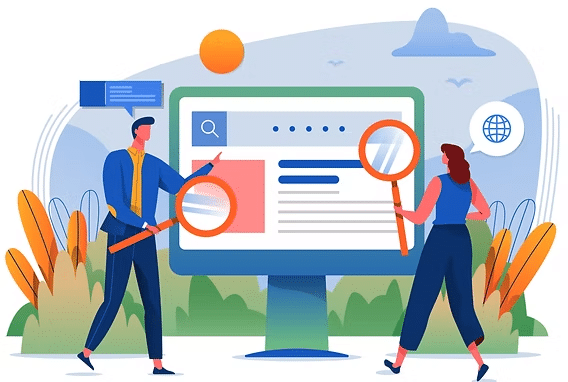
Here’s where it gets interesting. AI search engines aren’t just scanning for keywords anymore—they’re trying to understand the world. They’re connecting brands, topics, and authority to decide who gets mentioned in their answers.
Think of it like a massive digital brain trying to recommend the most trusted source for every question.
The Pillars Behind AI Decisions

1 LLM Training Data — The AI’s Library
Models like ChatGPT were “fed” an enormous library of the internet: books, news articles, research papers.
If your brand was mentioned in reputable sources, the AI already has a mental note of you. No presence? The AI can’t cite you.
2 Authority Signals — Your Digital Reputation
If other experts, websites, or reviews talk about your brand, the AI sees it as a green light. Think of it like a reputation score. The more trusted voices that reference you, the more likely you’ll appear in summaries and recommendations.
3 Entity Recognition — The “Who is Who” Rule
AI doesn’t just see words; it sees entities: people, businesses, products.
For example, “Joe’s Coffee” is an entity. The AI cross-checks your info across websites—location, description, reviews—to confirm you’re real and reliable. Consistency is key.
4 Topical Authority — Be the Professor
Don’t be a jack-of-all-trades. AI favors specialists.
If you consistently produce content in a niche, it sees you as the Professor of that topic. Example: a “Singapore Food Expert” is more likely to be cited in AI summaries about local cuisine than a generic food blog.
5 Structured Data — The Translator
Structured Data (like Schema.org) acts like a translator for AI.
It tells the AI exactly what your price range, location, and reviews are—so it doesn’t have to guess. Think of it like a nutrition label on a food box: clear, standardized info the AI can read instantly.
Old SEO vs. New AI Search
| Aspect | Old SEO | New AI Search |
| Focus | Keywords | Entities & Relationships |
| Goal | Rank on page one | Be cited & recommended |
| Trust | Backlinks | Authority signals + mentions |
| Scope | Individual pages | Brand-wide recognition |
2026 Strategy Tip
Make your brand name consistent everywhere online. Variations confuse AI. If your brand appears as “Joe’s Coffee,” “Joes Coffee,” and “Joe Coffee,” the AI struggles to recognize you as a single entity. Uniform naming = instant recognition.
Think of AI as a smart assistant, not a search engine. It wants to answer confidently. If your content, reputation, and structured data signal clarity, trust, and expertise, the AI will happily mention your brand—without anyone ever clicking a link.
10 Proven Strategies to Improve Brand Visibility in AI Search Engines

If you want brand visibility in AI search in 2026, it’s all about being clear, authoritative, and easy for AI to trust. Here are 10 practical strategies you can start using today. Each one is short, actionable, and focused on quality over trickery.
1 Build Topical Authority Clusters
Focus on becoming the go-to expert on a single topic. Instead of spreading thin across random subjects, create a main pillar page and supporting articles that dive deep into related subtopics. AI notices depth and consistency, which increases trust and citations.
2 Implement Advanced Schema Markup
Think of Schema.org as the AI Translator. By adding structured data to your pages, you tell AI exactly what your content means—like prices, locations, and reviews. The clearer your data, the easier AI can include you in summaries and overviews.
3 Earn Editorial Mentions
Get other trusted websites and industry experts to reference your brand. Each mention acts as a digital recommendation, boosting your reputation in AI’s “eyes.” The trick is to provide unique insights that others want to cite.
4 Optimize for AI Overview Snippets
Write short, clear answers (around 40–60 words) for common questions in your niche. Keep them concise and structured so AI can copy and paste them into summaries. Think of these as “ready-to-use quotes” the AI can trust.
5 Publish Original Research
Being the source of new data makes your brand a magnet for citations. Share surveys, case studies, or experiments that others reference. AI favors original, trustworthy insights over recycled content.
6 Create Citation-Friendly Definitions
Write clear “What is…” or “How does…” blocks. Make the explanation so simple that AI has no choice but to pull it directly. This is one of the fastest ways to get your brand into AI answers.
7 Strengthen Brand Entity Signals
Treat this as Digital ID Verification. Make sure AI can clearly identify your business: who you are, what you do, and where you operate. Consistency across websites, directories, and social profiles is key.
8 Improve Brand Consistency
Keep your brand name, address, and tone the same everywhere online. Mixed information confuses AI, making it less likely to cite you. A unified presence builds trust and helps with long-term visibility.
9 Optimize for AI-Generated Answers
Structure your content to answer the Who, What, Why, and How of your topic. Break answers into clear sections and short paragraphs so AI can easily pull information. This makes your content snippet-ready.
10 Build Digital PR Campaigns
Use news, social buzz, and media coverage to signal activity around your brand. When AI sees your brand frequently mentioned across credible sources, it’s more likely to include you in its summaries and recommendations.
Quick Win Checklist: Start Today
- ✅ Audit your website for consistent brand name, location, and messaging.
- ✅ Identify 3–5 key questions your customers ask and create 50–60 word answers.
- ✅ Add structured data (Schema.org) to your top-performing pages.
By applying these best practices for improving brand visibility in AI search and best practices for increasing brand visibility in AI-generated search results, you’re putting your brand where it matters most: directly in the AI answer.
How to Improve Brand Visibility in AI Generated Answers
Here’s a little secret: AI is lazy. It doesn’t want to read long, messy paragraphs. It wants the best answer served on a silver platter. If you make it easy, your brand gets featured. If not, it moves on. That’s why how to improve brand visibility in AI generated answers is as much about layout as it is about content.
Structured Formatting — Give the AI a Skeleton
Use H2s and H3s to outline your content clearly. Think of them like labeled folders in a filing cabinet. Each section tells the AI, “Here’s the topic, here’s the subtopic.”
Before (messy):
Our coffee shop is great. People love it. We have awards. You should visit. We opened in 2015.
After (AI-friendly):
H2: Why Our Coffee Shop Stands Out
- Award-winning brews since 2015
- Customer favorites featured weekly
- Cozy ambiance perfect for meetings
The AI sees the structure immediately and knows what belongs where.
FAQ Schema — Talk Directly to the AI
Adding a Frequently Asked Questions section with Schema.org code is like whispering the answers straight into the AI’s ear. Each question and answer block becomes snippet-ready material.
Example:
Q: What are the best coffee beans in Singapore?
A: Our signature Arabica beans are roasted weekly and rated top 5 by local critics.
Direct Answer Blocks — Don’t Bury the Lead
Start each section with a 2–3 sentence answer that solves the reader’s question immediately. The AI loves these because it can grab and display them without hunting for information.
Example:
Our Arabica beans are roasted weekly, ranked among Singapore’s top 5, and sourced from sustainable farms. This ensures a fresh, bold flavor every cup.
Bullet Summaries — Make Lists AI-Friendly
AI can’t summarize a wall of text easily. Bullet points make it 10x easier for the AI to generate list-based answers.
- Fresh Arabica beans
- Weekly roasting schedule
- Top 5 local ranking
Statistical Content — Numbers Speak Loudly
AI loves numbers. Include concrete stats whenever possible.
75% of our customers return within a week because of our freshness guarantee.
Numbers give the AI authority signals, making your content more likely to be cited in AI-generated answers.
Before & After Checklist
| Task | Before | After |
| Section Titles | One long paragraph | H2 + H3 clearly labeled |
| Key Answer | Buried in text | Direct 2–3 sentence block at top |
| Supporting Points | Paragraphs only | Bullet summaries |
| Authority Signals | Vague claims | Stats, awards, citations |
| FAQ | None | FAQ Schema with clear Q&A |
AI-Ready Direct Answer Template
Use this 4-line formula every time:
- Answer first: 1–2 sentences directly answering the question.
- Support: Add 1 sentence with a concrete example or stat.
- Highlight uniqueness: Explain why your brand/topic is notable.
- Optional CTA: One line guiding the user or linking to more info.
If you take nothing else away, remember this: serve the AI exactly what it wants, clearly and quickly, and your brand will get noticed.
How to Track Brand Visibility in AI Language Models
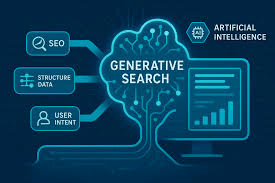
Here’s the reality: in 2026, there’s no “Page 1” for AI search results. You can’t just open a rank tracker and call it a day. Tracking how to track brand visibility in AI language models requires a multi-lens approach—looking at what the AI says, who it cites, and how often your brand appears in answers. Think of it like a doctor checking your brand’s vitals: you don’t need fancy tools, just consistent observation.
Manual Prompt Testing — The “Incognito” Method
Ask the AI the same questions your customers would ask. For example:
“What is the best coffee shop in Singapore?”
Check if your brand is mentioned in the AI’s answer. Test different prompts and phrasing to see if visibility is consistent. This gives you a real-world sense of presence in AI-generated answers.
Brand Mention Monitoring
Keep an eye on your brand across social media, news sites, and forums. More mentions often translate to higher AI visibility. Tools like Google Alerts, Mention, or even manual tracking can help you see if your brand is gaining traction online.
Citation Tracking
When AI includes a source link, click through. Which pages does it pull from most often? Which articles, blog posts, or press mentions are being cited? This helps you identify your strongest content and see where the AI prefers to get information.
AI Visibility Benchmarks — Share of Model
Forget ranking #1. Instead, measure how often AI recommends you versus your competitors. Call it “Share of Model.” For example, if your brand appears in 4 out of 10 relevant AI answers and competitors appear in 6, you have 40% share. Track this over time to monitor growth.
Tracking Toolkit
| What to Track | Tool / Method to Use |
| AI Mentions | Manual prompt testing with ChatGPT, Perplexity, Google Gemini |
| Brand Mentions | Google Alerts, Mention, social listening tools |
| Citation Sources | Click AI-provided links during prompt tests |
| Share of Model | Manual logs or spreadsheets comparing your mentions vs competitors |
It’s a marathon, not a sprint. Start small, check your brand’s “vitals” weekly, and gradually build a clearer picture of your AI visibility.
With consistent monitoring and small adjustments, you’ll know exactly how your brand is performing—and which strategies are actually working.